


Hey there! As a supplier of special-shaped springs, I've been getting a lot of questions lately about how to adjust the stiffness of these unique springs. So, I thought I'd write this blog post to share some insights and tips on this topic.
First off, let's understand what stiffness means in the context of springs. Stiffness, also known as the spring rate, is the amount of force required to compress or extend a spring by a certain distance. In simple terms, a stiffer spring needs more force to change its shape compared to a less stiff one.
Now, why would you want to adjust the stiffness of special-shaped springs? Well, different applications require different levels of stiffness. For example, in automotive engines, special-shaped springs need to be stiff enough to withstand high pressures and vibrations. On the other hand, in some precision instruments, a more flexible spring might be needed to ensure accurate measurements.
Factors Affecting the Stiffness of Special-Shaped Springs
There are several factors that can influence the stiffness of special-shaped springs. Let's take a look at them one by one.
Material
The material of the spring plays a crucial role in determining its stiffness. Different materials have different elastic properties. For instance, high-carbon steel is known for its high strength and stiffness, making it a popular choice for heavy-duty applications. Stainless steel, on the other hand, offers good corrosion resistance and can have a wide range of stiffness depending on its composition. If you need a spring with high stiffness, you might consider using materials like alloy steels or titanium alloys.
Wire Diameter
The diameter of the wire used to make the spring also affects its stiffness. Generally, a thicker wire will result in a stiffer spring. This is because a thicker wire has more material to resist deformation. So, if you want to increase the stiffness of your special-shaped spring, you can increase the wire diameter. However, keep in mind that increasing the wire diameter might also increase the size and weight of the spring, which could be a concern in some applications.

Coil Diameter
The coil diameter is another important factor. A smaller coil diameter usually leads to a stiffer spring. When the coil diameter is reduced, the spring becomes more compact, and the wire has to bend more to achieve the same amount of compression or extension. This increased bending resistance results in higher stiffness.
Number of Coils
The number of coils in a spring is inversely proportional to its stiffness. That means, as the number of coils increases, the stiffness decreases. A spring with more coils has more flexibility because there are more segments of the wire that can bend. So, if you need a stiffer spring, you can reduce the number of coils.
Shape of the Spring
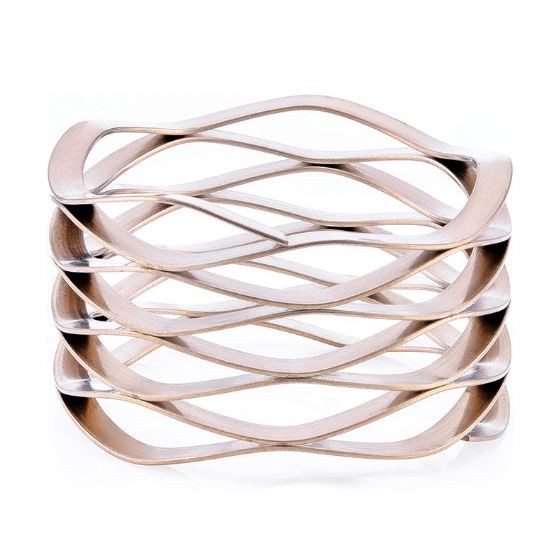
Since we're talking about special-shaped springs, the shape itself can have a significant impact on stiffness. For example, Wave Springs have a unique wave-like shape that allows them to provide a high amount of force in a small space. Their stiffness can be adjusted by changing the amplitude and wavelength of the waves. Similarly, Wire Formed Springs can be designed in various shapes, and the stiffness can be tailored by modifying the curvature and dimensions of the wire form. Torsion Bar Springs work based on torsion, and their stiffness can be adjusted by changing the length, diameter, and material of the bar.
Methods to Adjust the Stiffness of Special-Shaped Springs
Now that we know the factors affecting stiffness, let's discuss some methods to actually adjust it.
Heat Treatment
Heat treatment is a common method used to modify the properties of spring materials. By heating the spring to a specific temperature and then cooling it at a controlled rate, you can change its internal structure and, consequently, its stiffness. For example, quenching and tempering can increase the hardness and stiffness of high-carbon steel springs. However, heat treatment needs to be carefully controlled to avoid over-treating the spring, which could lead to brittleness and reduced fatigue life.
Cold Working
Cold working involves deforming the spring at room temperature. This can be done by processes like cold coiling or cold drawing. Cold working increases the dislocation density in the material, which makes it more resistant to deformation and thus increases the stiffness. However, cold working can also introduce residual stresses in the spring, which might need to be relieved through stress-relieving heat treatment.
Design Modification
As mentioned earlier, changing the wire diameter, coil diameter, number of coils, or the shape of the spring can directly affect its stiffness. You can work with a spring design engineer to optimize the design based on your specific requirements. For example, if you need a stiffer spring for a particular application, the engineer might recommend increasing the wire diameter and reducing the number of coils while keeping the overall dimensions and performance requirements in mind.
Testing and Quality Control
Once you've adjusted the stiffness of your special-shaped spring, it's important to test it to ensure that it meets your specifications. There are several testing methods available, such as compression testing, tension testing, and torsion testing. These tests measure the force required to compress, extend, or twist the spring by a certain amount. By comparing the test results with the desired stiffness values, you can determine if the adjustment was successful.
Quality control is also crucial throughout the manufacturing process. This includes inspecting the raw materials, monitoring the manufacturing processes, and conducting final inspections on the finished springs. By maintaining strict quality control, you can ensure that each spring has the consistent stiffness and performance you need.
Conclusion
Adjusting the stiffness of special-shaped springs is a complex but achievable task. By understanding the factors affecting stiffness and using the appropriate adjustment methods, you can customize the springs to meet the specific requirements of your applications. Whether you're in the automotive, aerospace, or any other industry, having the right stiffness in your special-shaped springs is essential for optimal performance.
If you're looking for high-quality special-shaped springs with adjustable stiffness, we're here to help. We have a team of experienced engineers and a state-of-the-art manufacturing facility to produce springs that meet your exact specifications. Contact us to start a discussion about your spring requirements and let's work together to find the perfect solution for you.
References
- "Spring Design Handbook" by William A. Nash
- "Mechanical Springs" by Albert A. Poplawski
- Various industry standards and technical papers on spring manufacturing and design.


