


Can hydraulic springs be used in mining equipment? This is a question that has been on the minds of many in the mining industry, and as a supplier of hydraulic springs, I'm excited to delve into this topic and provide some insights.
Understanding Hydraulic Springs
Hydraulic springs are a type of spring that rely on the principles of hydraulics to provide a cushioning or suspension effect. They typically consist of a cylinder filled with hydraulic fluid and a piston. When a force is applied to the spring, the piston moves within the cylinder, compressing the hydraulic fluid. This compression creates a resistance force that opposes the applied force, similar to how a traditional mechanical spring works. However, hydraulic springs offer several advantages over their mechanical counterparts.
One of the key benefits of hydraulic springs is their ability to provide a variable spring rate. Unlike mechanical springs, which have a fixed spring rate determined by their design and material properties, hydraulic springs can adjust their stiffness based on the magnitude of the applied force. This makes them ideal for applications where the load may vary, such as in mining equipment.
Another advantage of hydraulic springs is their ability to dampen vibrations and shocks. The hydraulic fluid within the spring acts as a shock absorber, dissipating energy and reducing the impact of sudden loads. This can help to protect the equipment and extend its lifespan, especially in harsh mining environments where vibrations and shocks are common.
Applications of Hydraulic Springs in Mining Equipment
Now, let's explore some specific areas in mining equipment where hydraulic springs can be effectively used.
Haul Trucks
Haul trucks are used to transport large quantities of ore and waste material in mining operations. These trucks are subjected to heavy loads and rough terrain, which can cause significant stress on the suspension system. Hydraulic springs can be used in the suspension of haul trucks to provide a smoother ride and better handling. By adjusting the spring rate based on the load, hydraulic springs can ensure that the truck remains stable and comfortable, even when carrying a full load.
Excavators
Excavators are essential mining equipment used for digging and moving earth. The boom and arm of an excavator are subjected to high forces and vibrations during operation. Hydraulic springs can be installed in the joints of the boom and arm to provide cushioning and reduce the stress on the structure. This can improve the efficiency and durability of the excavator, as well as reduce maintenance costs.
Crushers
Crushers are used to break down large rocks into smaller pieces. During the crushing process, the crusher is subjected to high impact forces. Hydraulic springs can be used in the crusher's suspension system to absorb these forces and protect the equipment from damage. Additionally, the variable spring rate of hydraulic springs can help to optimize the crushing process by adjusting the force applied to the rocks based on their size and hardness.
Comparing Hydraulic Springs with Other Types of Springs
While hydraulic springs offer many advantages, it's important to note that there are other types of springs available on the market, each with its own set of characteristics. Let's compare hydraulic springs with some common types of springs used in mining equipment.
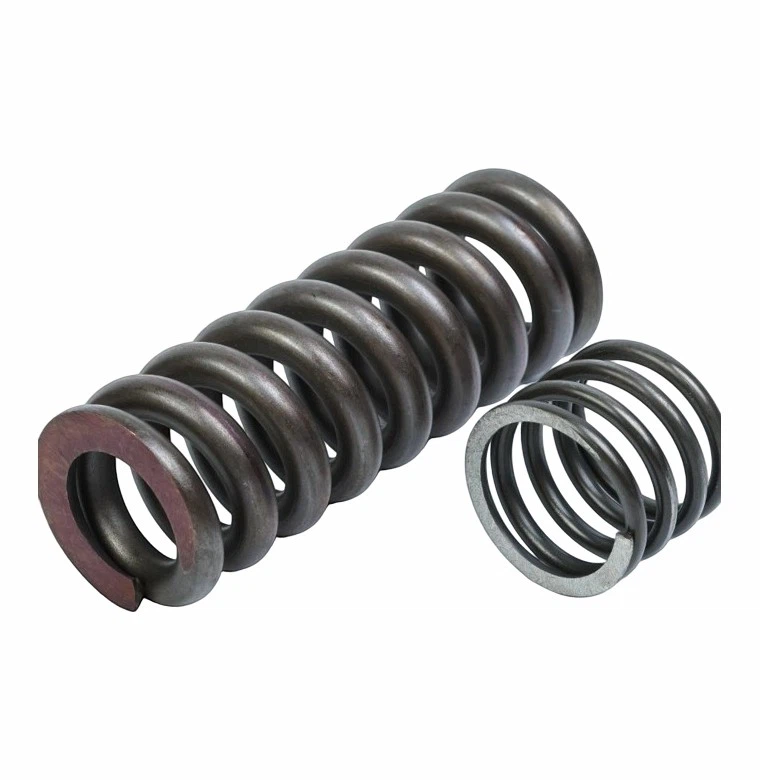
Mechanical Springs
Mechanical springs, such as coil springs and leaf springs, are the most traditional type of spring used in suspension systems. They are simple in design and relatively inexpensive. However, mechanical springs have a fixed spring rate, which means they may not be able to adapt to changing loads. In contrast, hydraulic springs can provide a variable spring rate, making them more suitable for applications where the load varies.
Air Springs
Air springs use compressed air to provide a cushioning effect. They are known for their ability to provide a smooth ride and adjust their stiffness based on the load. However, air springs require a complex system of valves and compressors to operate, which can increase the cost and maintenance requirements. Hydraulic springs, on the other hand, are more straightforward in design and do not require additional equipment to function.
Our Product Offerings
As a hydraulic spring supplier, we offer a wide range of products to meet the diverse needs of the mining industry. In addition to our hydraulic springs, we also supply other types of compression springs, such as Printing Press Gripper Springs, Valve Compression Springs, and SWP-B Piano Wire Compression Springs. Our springs are made from high-quality materials and are designed to withstand the harsh conditions of mining operations.
Conclusion
In conclusion, hydraulic springs can be a valuable addition to mining equipment. Their ability to provide a variable spring rate and dampen vibrations makes them well-suited for applications where the load may vary and where shock absorption is required. By using hydraulic springs in mining equipment, operators can improve the performance, durability, and safety of their equipment.
If you're in the mining industry and are interested in learning more about our hydraulic springs or other compression springs, we encourage you to contact us for a consultation. Our team of experts can help you select the right springs for your specific needs and provide you with detailed information on pricing and delivery.
References
- "Hydraulic Springs: Principles and Applications", Engineering Handbook
- "Mining Equipment Design and Maintenance", Industry Journal
- "Spring Technology Advancements in the Mining Sector", Research Paper


