


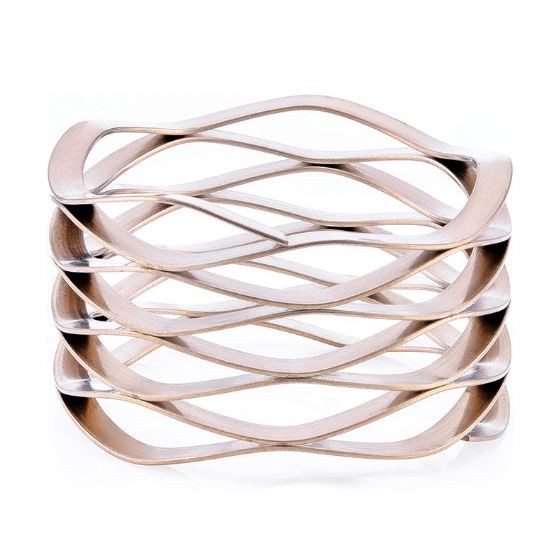
Surface roughness is a critical parameter in the manufacturing and performance of wave springs. As a Wave Springs supplier, I have witnessed firsthand the importance of understanding and controlling surface roughness in these specialized components. In this blog post, I will delve into the concept of surface roughness in wave springs, its implications, and how it relates to the quality and functionality of these products.
What is Surface Roughness?
Surface roughness refers to the irregularities present on the surface of a material. These irregularities can be microscopic and are typically measured in terms of height, spacing, and shape. In the context of wave springs, surface roughness can have a significant impact on their performance, durability, and compatibility with other components.
The surface roughness of a wave spring is influenced by several factors, including the manufacturing process, the material used, and the finishing treatments applied. For example, during the coiling process, the wire may experience friction against the tooling, which can create surface irregularities. Additionally, the type of material, such as stainless steel or carbon steel, can affect the surface finish due to differences in hardness and ductility.
Measuring Surface Roughness
There are several methods available for measuring surface roughness, each with its own advantages and limitations. One of the most common methods is the use of a profilometer, which measures the height variations of the surface along a specified path. The profilometer provides a numerical value, such as Ra (arithmetical mean deviation of the profile), which represents the average height of the surface irregularities.
Another method is the use of optical microscopy, which allows for visual inspection of the surface at a high magnification. This method can provide detailed information about the shape and distribution of the surface irregularities, but it may not provide a quantitative measurement.
Implications of Surface Roughness in Wave Springs
The surface roughness of wave springs can have several implications for their performance and functionality. Here are some key areas where surface roughness can make a difference:
Friction and Wear
A rough surface can increase friction between the wave spring and the mating components, leading to increased wear and reduced lifespan. This is particularly important in applications where the wave spring is subjected to repeated cycling or high loads. By reducing the surface roughness, the friction can be minimized, resulting in improved efficiency and durability.
Fatigue Resistance
Surface roughness can also affect the fatigue resistance of wave springs. Irregularities on the surface can act as stress concentrators, increasing the likelihood of crack initiation and propagation. By achieving a smoother surface finish, the stress concentration can be reduced, improving the fatigue life of the wave spring.
Corrosion Resistance
In corrosive environments, the surface roughness of wave springs can play a crucial role in their corrosion resistance. A rough surface provides more surface area for corrosion to occur, increasing the risk of pitting and rusting. By applying a smooth surface finish, the corrosion resistance can be enhanced, protecting the wave spring from damage.
Assembly and Compatibility
The surface roughness of wave springs can also affect their assembly and compatibility with other components. A rough surface may cause difficulties during assembly, leading to misalignment or improper seating. Additionally, a rough surface can increase the risk of galling or scoring, which can damage the mating components. By ensuring a smooth surface finish, the assembly process can be simplified, and the compatibility with other components can be improved.
Controlling Surface Roughness in Wave Springs
As a Wave Springs supplier, we take several measures to control the surface roughness of our products. Here are some of the key steps we take:
Material Selection
The choice of material can have a significant impact on the surface roughness of wave springs. We carefully select materials with low inherent roughness and good machinability to ensure a smooth surface finish. Additionally, we work closely with our material suppliers to ensure the quality and consistency of the materials used in our manufacturing process.

Manufacturing Process Optimization
We continuously optimize our manufacturing process to minimize surface roughness. This includes using high-quality tooling, controlling the coiling parameters, and implementing proper heat treatment processes. By carefully controlling these factors, we can achieve a consistent and smooth surface finish on our wave springs.
Finishing Treatments
In addition to the manufacturing process, we also apply finishing treatments to further improve the surface roughness of our wave springs. These treatments can include polishing, grinding, or coating. Polishing can remove surface irregularities and create a smooth, mirror-like finish, while grinding can provide a more precise and uniform surface. Coating can also be applied to enhance the corrosion resistance and reduce friction.
Conclusion
Surface roughness is a critical parameter in the manufacturing and performance of wave springs. By understanding the concept of surface roughness, its implications, and how to control it, we can ensure the quality and functionality of our wave springs. As a Wave Springs supplier, we are committed to providing our customers with high-quality products that meet their specific requirements. If you are interested in learning more about our Wave Springs or have any questions, please feel free to contact us for a procurement discussion.
References
- ISO 4287: Geometrical product specifications (GPS) - Surface texture: Profile method - Terms, definitions and surface texture parameters.
- ASME B46.1: Surface Texture (Surface Roughness, Waviness, and Lay).
- Metal Handbook: Properties and Selection: Nonferrous Alloys and Pure Metals, Volume 2, 9th Edition.


